Can Power Washing Damage Vinyl Siding? 3 Critical Mistakes

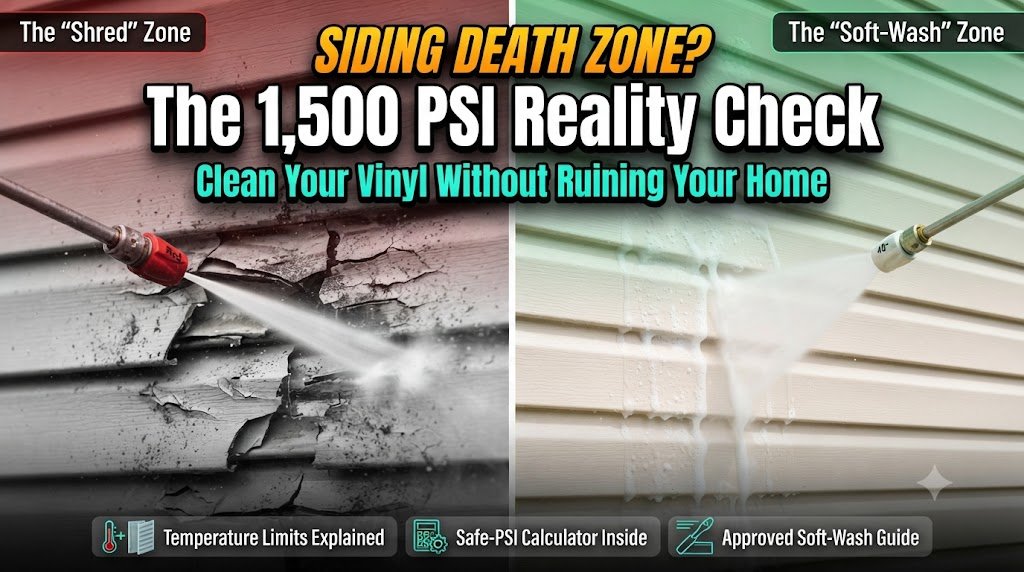
A split-screen graphic showing damaged, cracked vinyl siding from high-pressure washing next to clean siding being safely soft washed, featuring a safe-PSI calculator badge. Can power washing Damage Vinyl Siding

Can power washing damage vinyl siding? Yes. Extruded residential vinyl siding can easily warp, crack, or puncture when exposed to pressure exceeding 1,500 PSI. To prevent permanent structural damage, water-wrap mold intrusion, or voiding your manufacturer’s warranty, you must restrict washing to a maximum limit of 1,200 PSI, maintain a 12-to-18-inch distance, and use a wide-angle 40-degree white fan tip combined with a specialized, low-pressure chemical surfactant. (Use our dynamic siding age and temperature calculator below to find your property’s exact shatter threshold).

Concrete Curing Time Trap: The Ultimate 75% Strength Reality

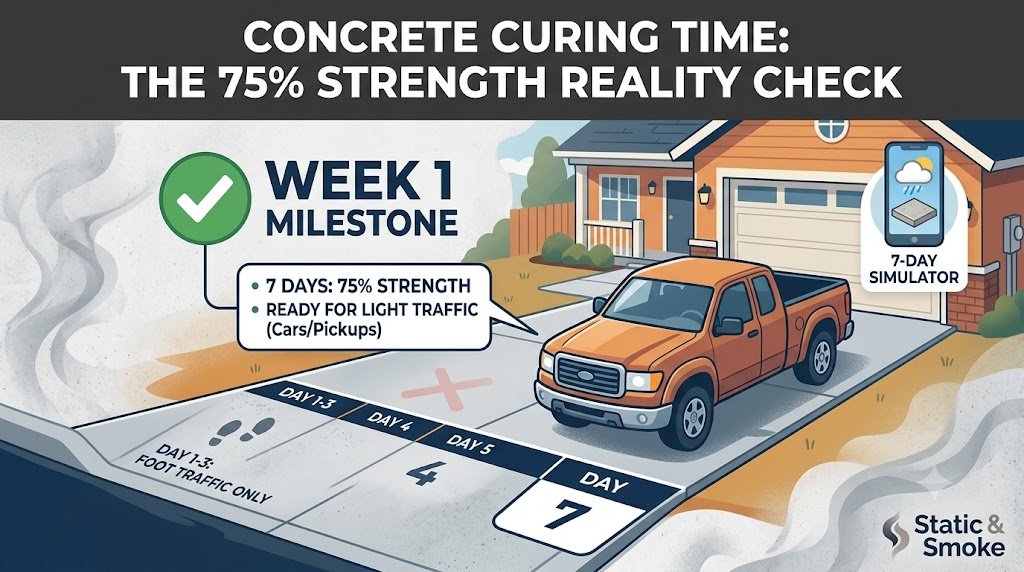
Infographic explaining concrete curing time, showing a residential driveway with an orange pickup truck parked on the 7-day mark. Text callouts indicate the Week 1 milestone reaches 75% strength, making it ready for light traffic.

Stop waiting 28 days to use your new driveway. Discover why the 7-day, 75% compressive strength threshold is the only metric that matters, and learn how to manage hydration to safely get your concrete ready for traffic weeks ahead of schedule.

Dangerous DIY Electrical Wiring: The 4 Biggest Mistakes to Spot Before It Sparks

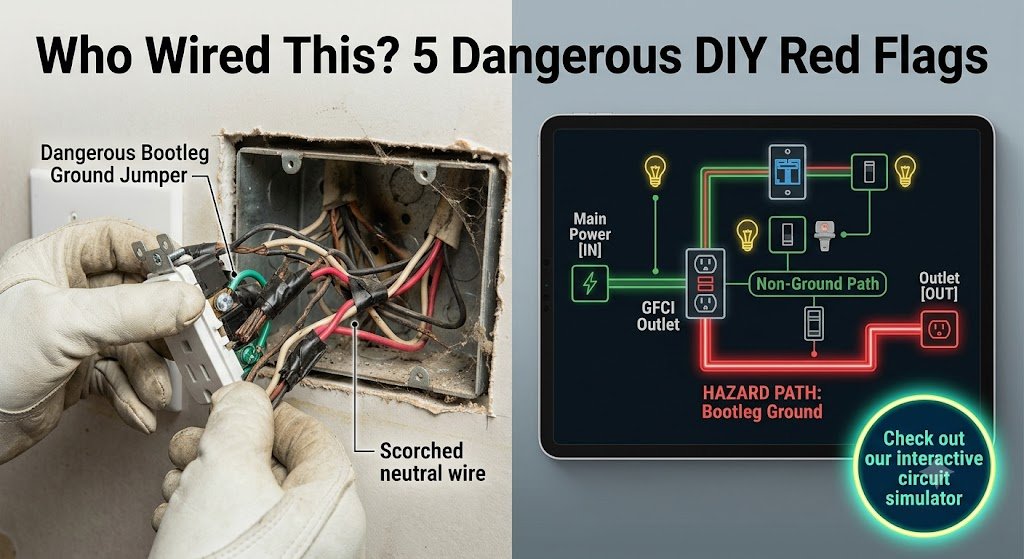
Split-screen displaying dangerous DIY electrical wiring in a wall outlet with a bootleg ground jumper, next to a digital interactive circuit simulator.

You buy an older house with good bones, solid trim, and a yard that stretches just far enough. It feels like home. But the moment you decide to swap out an ugly, almond-colored outlet cover from 1978 for a clean white faceplate, the illusion cracks. You pull the receptacle out of the wall, freeze, and … Read more

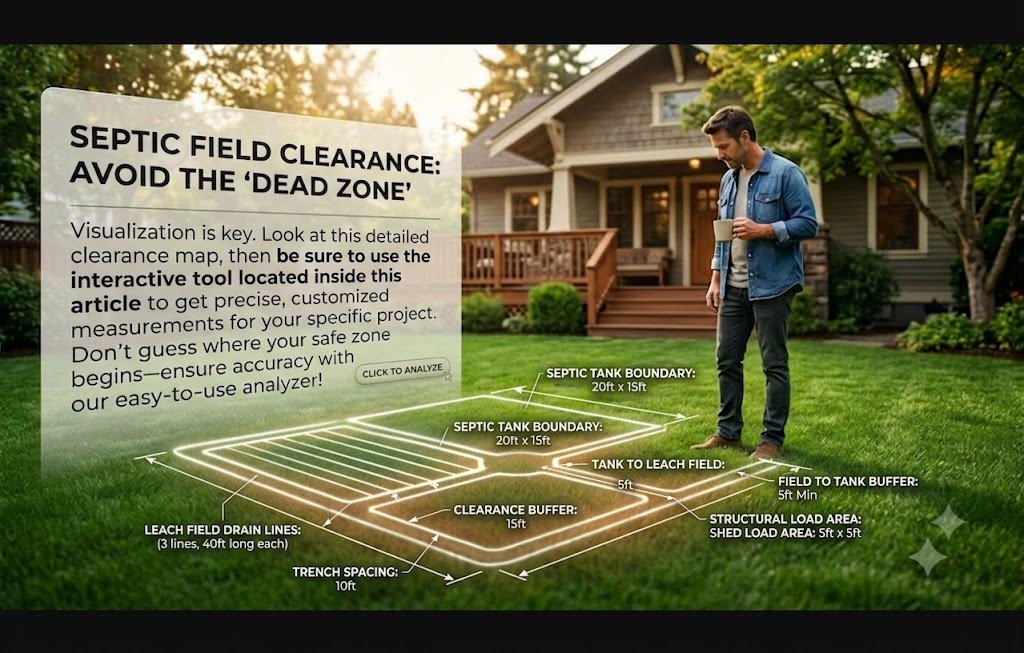
Septic Leach Field Clearance: 3 Essential Rules to Avoid the “Dead Zone”

A visualization detailing the essential rules for septic leach field clearance, including safe zones, dead zones, and the 15-foot minimum setback required to prevent soil compaction and system failure.

There is a certain kind of magic in shaping your own patch of earth. We’ve all been there: staring out the back window, coffee in hand, visualizing exactly where that new storage shed will sit, or where the deck will wrap around a new hot tub. Your backyard is a canvas waiting for your next … Read more

Disclaimer: The technical data, spatial clearances, and diagnostic methods provided on Staticandsmoke.com are for educational, informational, and entertainment purposes only. Soil conditions, municipal codes, and structural regulations vary drastically by jurisdiction and specific property layout. This content does not constitute professional engineering, architectural, or legal advice. Always consult with a licensed contractor, certified local inspector, or your local health department before executing any excavation, building construction, or utility repairs. The owners and operators of Staticandsmoke.com assume no liability for structural damage, municipal fines, or personal injury resulting from the use or misuse of the information or interactive tools contained on this site.