
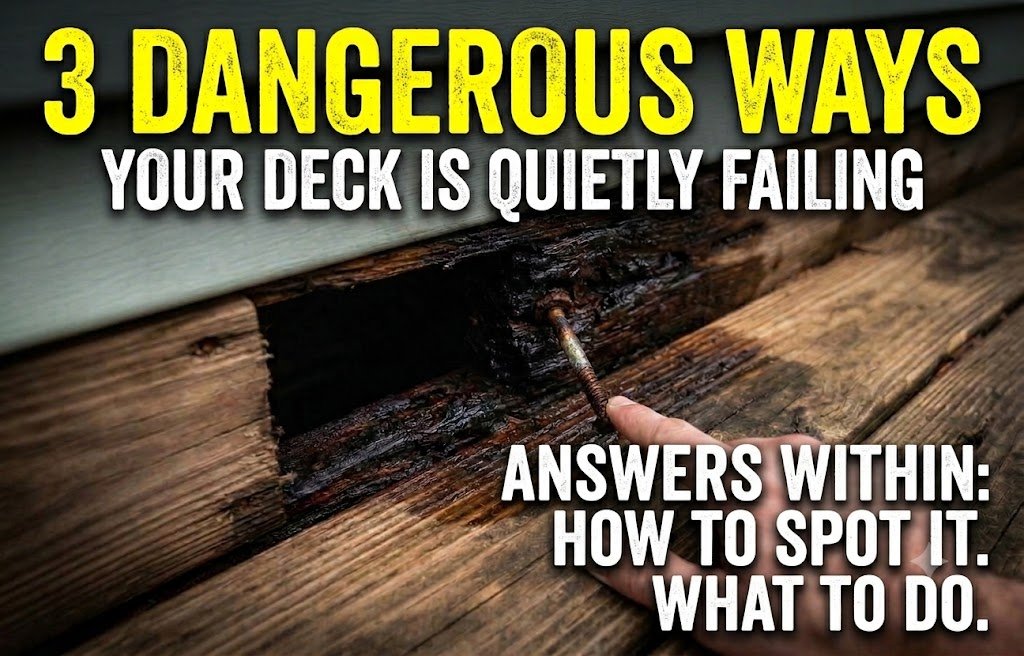
Ledger flashing is the single most critical line of defense protecting your home’s structural integrity from silent, destructive moisture intrusion. When you step out onto your elevated outdoor living space, you trust that the framing beneath your feet is securely anchored to your home. However, thousands of residential decks across the country suffer from severe water damage where the framing meets the exterior wall. Wood deck ledger boards fail catastrophically when missing or improperly installed ledger flashing allows moisture to bridge the gap between the exterior siding and the underlying rim joist, leading to hidden rot, mold growth, and fastener shear.
If left unaddressed, this hidden decay compromises the structural stability of your entire deck, turning a peaceful backyard gathering space into an immediate safety hazard.
Understanding the mechanics of ledger board failure requires looking past the surface boards and examining the building envelope interface. When rainwater runs down exterior walls, it relies on gravity and proper ledger flashing to shed safely away from structural connections. Without durable copper or polymer membrane protection, water slips behind the siding and enters the bolt holes drilled for lag screws or through-bolts.As moisture saturates the untreated lumber of the rim joist, wood fibers break down rapidly due to accelerated wood decay. This localized rot destroys the friction and wood density that keep heavy-duty fasteners anchored, eventually causing the ledger board to pull away from the house under normal live loads.
Stop Deck Collapse With Our Interactive Ledger Flashing Tool
Before investing in costly structural repairs or tearing up your rim joist, use our interactive diagnostic tool below to calculate your specific ledger board’s risk level. By inputting the age of your outdoor structure and evaluating your current flashing installation, you can instantly determine whether your setup requires immediate reinforcement.
Ledger Board Structural Risk Estimator
Input fastener age and flashing status to evaluate immediate deck collapse vulnerability.
The Physics of Fastener Shear and Ledger Flashing Failures
When evaluating ledger board health, property owners must understand how moisture accelerates fastener failure. Standard steel lag screws or bolts in wet, decaying lumber are subjected to galvanic corrosion and constant shear stress. As the wood expands and contracts through seasonal freeze-thaw cycles, gaps widen around the fasteners. Water pooling inside these micro-gaps attacks the metal surface, reducing the cross-sectional area of the bolt until it snaps under minimal weight.
To prevent catastrophic failure, modern building codes mandate specific lateral load connectors and tension ties that tie the deck framing directly into the home’s floor joists, rather than relying solely on the ledger board and lag screws. Retrofitting these connectors during a professional inspection can mean the difference between a secure outdoor living space and a sudden structural collapse.
How to Inspect and Prevent Ledger Flashing Failures
Catching structural decay before it causes a major collapse requires regular hands-on checks along your home’s building envelope. Homeowners should perform a thorough visual inspection at least once a year—ideally before heavy seasonal rains or winter freeze cycles.
- Check the Flashing Lip: Inspect the metal lip resting along the top edge of your ledger board. A proper ledger flashing installation should extend at least 1/4 inch past the face of the board and feature a clear drip edge to direct water away from the siding.
- Look for Rust Stains and Separation: Dark rust trails running down the siding or small gaps forming between the ledger board and the house indicate that water is bypassing your ledger flashing and seeping directly into the rim joist.
- Apply Self-Adhering Membrane Tape: When installing or repairing deck connections, pairing rigid metal ledger flashing with a flexible butyl or rubberized asphalt flashing tape creates an airtight, waterproof seal over all fastener penetrations.
Frequently Asked Questions
What causes wood deck ledger board failure?
Wood deck ledger boards fail when missing or improperly installed Z-flashing allows water to seep behind exterior siding, rotting the rim joist and rusting out structural lag screws.
How do I check if my deck ledger board is rotting?
Property owners can use a digital moisture meter around interior wall junctions and test for lateral movement or separation where the deck meets the house.
What kind of fasteners should be used on a ledger board?
Always use hot-dipped galvanized or stainless steel through-bolts or approved structural screw fasteners spaced according to local building code requirements, paired with reliable Z-flashing and sealing tape. or approved structural screw fasteners spaced according to local building code requirements, paired with reliable Z-flashing and sealing tape.
🛠️ What should we break down next? Let us know your suggestions in the comments—or drop us a line directly through our Contact Page!