
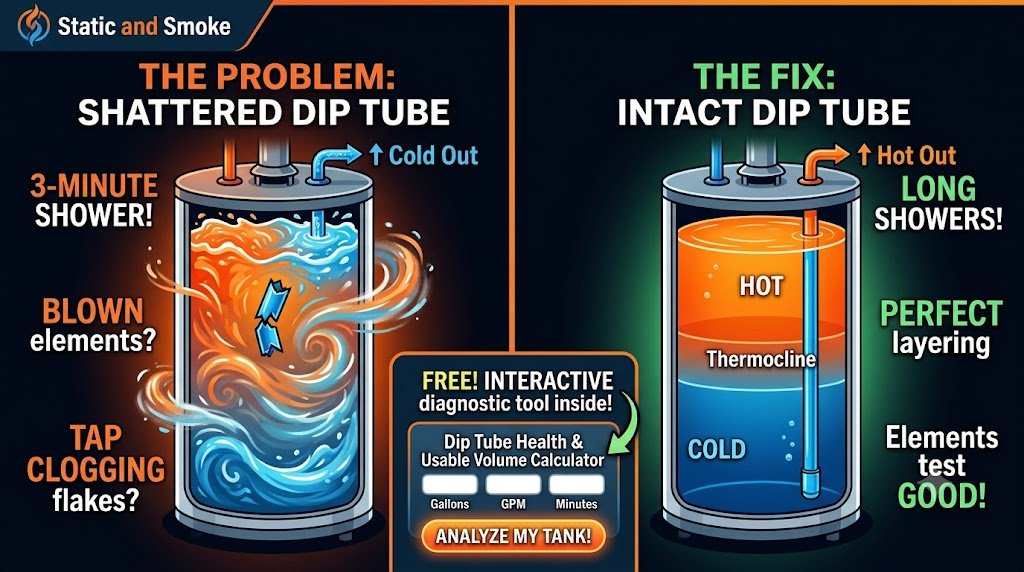
Running out of hot water unexpectedly can be frustrating. The symptom alone cannot identify the cause, but understanding how cold water moves through the tank can help explain why a water heater dip tube is one possibility. Overall performance can fluctuate based on key operational variables, such as incoming supply temperatures, thermostat setpoints, fixture flow rates, and total tank capacity. A damaged dip tube is one possible cause, alongside heating, sediment, mixing-valve, and plumbing issues.
What Is a Water Heater Dip Tube?
A water heater dip tube is a pipe attached to the cold water inlet inside standard water heating storage tanks that directs incoming cold water toward the lower part of the unit. In normal operation, warmer water remains near the top where it can exit through the outlet fitting for household use, while incoming cold water is delivered near the bottom where heating occurs.
What Might Be Happening If a Water Heater Dip Tube Fails
When a water heater dip tube functions correctly, cold water is driven to the bottom of the tank to avoid immediate mixing with the stored hot water above. If the dip tube degrades or breaks, the tube can no longer direct water toward the lower part of the tank as intended.
- Incoming cold water can enter near the top fitting and mix directly with the upper layer of hot water.
- The delivered water temperature may drop quickly during use as a result of mixing inside the tank.
- Overall hot water output varies by incoming supply temperatures, thermostat setpoints, fixture flow rates, and total tank capacity.
- Other possible causes include a faulty mixing valve or plumbing cross-connection, thermostat issues, sediment buildup, or heating element problems.
Why Water Heater Dip Tubes Fail
Like many plumbing components, some plastic dip tubes can wear out over time and may crack, break apart, or deteriorate inside the tank.
What the Homeowner Can Safely Observe
Homeowners can check for a few safe, visual, non-invasive indicators around the home:
- Plastic Fragments: Finding small plastic particles or flakes in faucet aerators, showerheads, or appliance strainers can be a clue, but do not confirm the source.
- Sudden Temperature Drops: Experiencing hot water that quickly turns cold can be a clue, but does not confirm the source.
- Data Plate Information: Taking a clear photo of the water heater data plate (showing the model and serial numbers) helps gather key information before calling for service.
What Requires Professional Judgment
Diagnosing electric water-heater components can require testing near high-voltage wiring. On gas units, evaluation may involve fuel-line and combustion components. Replacing internal parts also requires disconnecting pressurized plumbing connections. Contact a qualified plumbing professional if the problem persists or you notice leaks, electrical concerns, or gas-related concerns.
What to Document Before Calling a Plumber
To help streamline your discussion with a technician, documenting a few basic details beforehand can be useful. Safe, visual observations provide valuable context when describing what you are experiencing in the home. Whether you suspect a failing water heater dip tube or another plumbing issue entirely, use our interactive checklist below to organize your thoughts and key details before reaching out for service
Make a few notes before you call a plumber
Select any safe, non-invasive observations you have made. These details can help a plumbing professional evaluate the system, but they do not identify the cause on their own.
If you notice an active leak, electrical concern, or gas-related concern, contact a qualified plumbing professional. Avoid opening panels, disconnecting plumbing, or working on gas components.
Water Heater Dip Tube Summary & Next Steps
When dealing with unexpected hot water loss, accurate diagnosis requires evaluating multiple interconnected system variables. While visual clues like plastic particles or abrupt temperature changes point to potential issues, only an on-site physical inspection can pinpoint the exact cause. Gathering your basic observations and data plate information allows a professional to arrive prepared, saving time and ensuring a safe, accurate repair. Contact a qualified plumbing professional if the problem persists or if you notice any active leaks, electrical concerns, or gas-related issues.
🛠️ What should we break down next? let us know your suggestions in the comments—or drop us a line directly through our Contact Page!