
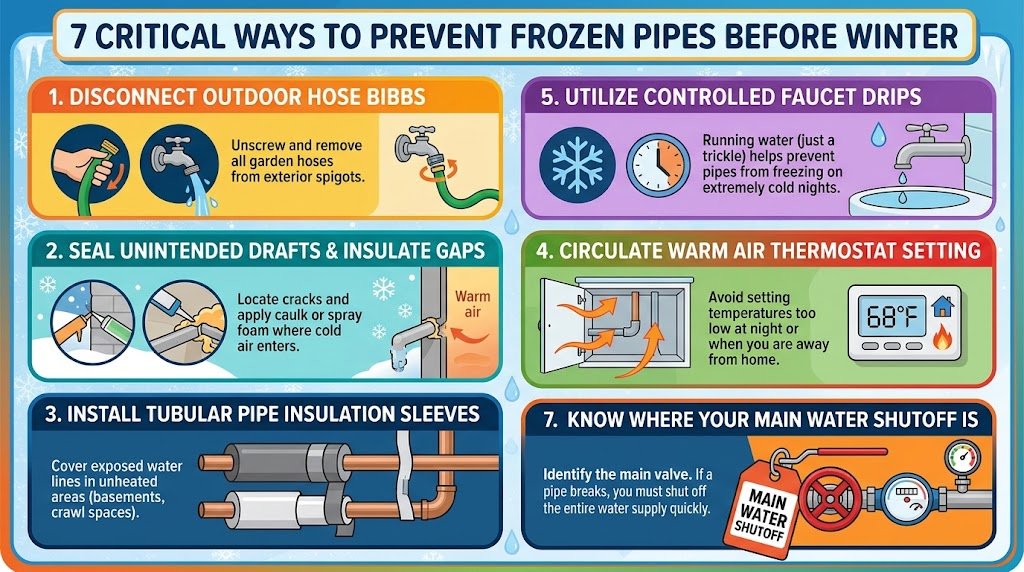
Understanding how to prevent frozen pipes before winter is your best line of defense when outdoor temperatures remain below 32°F (0°C). Water inside exposed or inadequately protected plumbing can begin to freeze, particularly in unheated spaces, exterior wall cavities, and areas prone to cold-air infiltration. Identifying localized cold zones, examining ambient air movement, and applying targeted, non-invasive winterization steps can significantly reduce seasonal freeze risks without risking unnecessary structural alterations.
Important Safety & Liability Disclaimer: If you suspect a pipe has already burst or is actively leaking behind structural framing, immediately shut off your main home water shutoff valve. Always consult a licensed, qualified plumbing professional before attempting invasive structural modifications, wall penetrations, or complex plumbing alterations.
The Physics of Pipe Rupture: Hydraulic Trapping Explained
A common misconception is that expanding ice breaks the pipe directly at the point of freezing. While water expands by roughly 9% by volume as it transitions into ice, freeze-related pipe ruptures can result from hydraulic pressure buildup in liquid water trapped between ice blockages. To prevent frozen pipes we must understand the hydraulic pressure buildup.
[Closed Valve / Ice Plug] <-- Trapped Liquid Water (Rising Pressure) --> [Ice Blockage]- Ice Formation & Sealing: Ice typically begins forming inside pipes exposed to cold drafts or uninsulated wall cavities, creating a solid ice plug inside the lumen.
- Hydraulic Trapping: When ice forms inside a pipe, it can restrict or completely block water movement. If the blockage traps liquid water between the ice and another obstruction, such as a closed valve or a second ice plug, pressure can increase as freezing continues.
- Pressure Accumulation: As the ice blockage grows, it can displace liquid water within the isolated section of pipe. Because liquid water is nearly incompressible, this displacement can create substantial hydraulic pressure when the trapped water has no available path for pressure relief. Because liquid water is nearly incompressible, even relatively small changes in the available space can produce substantial pressure increases when the water cannot escape.
- Pipe Rupture: The resulting pressure can cause a rupture in an unfrozen section of pipe, sometimes at a location separated from the original ice blockage.
Material Behavior Comparison
Different plumbing materials exhibit distinct physical behaviors when exposed to freezing conditions understanding these differences can help prevent frozen pipes:
| Material | General Freeze Behavior |
| Copper | Rigid metal tubing that can split when freezing water creates sufficient internal pressure. |
| Galvanized Steel | Rigid metal piping that can be vulnerable to freeze-related damage, particularly where corrosion or weakened threaded connections are present. |
| PEX (Cross-linked Polyethylene) | Flexible tubing that generally has greater resistance to freeze-related rupture, but is not freeze-proof. Connections and localized ice blockages can remain vulnerable. |
7 Critical Steps to Prevent Frozen Pipes
Addressing home freeze risks requires looking at the whole building system—evaluating ambient air movement, structural insulation continuity, and water line pathways rather than relying on a single isolated variable.
1. Disconnect and Drain Outdoor Hose Bibbs
One of the easiest ways to prevent freezing pipes is to disconnect all garden hoses, quick-connect adapters, and timers from exterior spigots before temperatures drop below freezing. Leaving a hose connected can prevent water from draining properly from a frost-free sillcock, leading to internal freezing and rupture. Where an interior isolation valve is installed, follow its instructions to shut off the supply, open the exterior faucet, and drain remaining water through the designated bleeder.
2. Identify and Seal Unintended Drafts
Cold air currents blowing directly across bare pipe walls can increase convective heat loss. Inspect rim joists, foundation penetrations, and exterior wall openings near plumbing runs. This can help prevent frozen pipes but be sure to use appropriate sealing materials specified for the specific penetration while maintaining required clearances around heat-generating fixtures. Avoid applying spray foam indiscriminately around gas lines, dryer exhausts, electrical components, or plastic plumbing materials. Follow applicable clearance requirements and the product and pipe manufacturer’s installation guidance.
Note on Crawl Space Vents: Avoid universally closing foundation vents without understanding your home’s moisture control design. Unvented crawl spaces require specific encapsulation protocols, while vented crawl spaces rely on airflow for moisture mitigation. Focus primarily on sealing air leaks immediately surrounding supply lines and rim joists.
3. Install Tubular Pipe Insulation Sleeves
Enclose exposed water supply lines located in unheated areas (basements, crawl spaces, and garages) with closed-cell polyethylene or elastomeric foam pipe insulation. Ensure butt joints and corner slits are sealed tightly with insulating tape to prevent ambient cold air from contacting bare piping. Remember that insulation slows heat loss and can help prevent frozen pipes, but it does not generate heat. Poorly protected pipes can still freeze during prolonged cold weather.
4. Circulate Warm Air from Living Spaces
During extreme cold spells, open cabinet doors beneath kitchen and bathroom sinks situated against exterior walls. This allows warm air from the home’s living spaces to reach supply piping running inside uninsulated or under-insulated wall voids and can help prevent frozen pipes.
5. Utilize Controlled Faucet Drips During Sustained Freezes
Moving water can help delay ice formation and prevent frozen pipes in vulnerable plumbing, although a dripping faucet does not guarantee that a pipe will remain unfrozen. Use this as a temporary precaution during severe cold, not as a replacement for proper insulation and freeze protection.
6. Maintain Consistent Thermostat Settings
Avoid setting thermostats to steep night-time setbacks during freezing weather. Maintaining a consistent baseline indoor temperature day and night to reduce heat loss in outer building cavities can help prevent frozen pipes, though maintaining indoor heat alone does not guarantee every concealed wall cavity stays above freezing.
7. Know Where Your Main Water Shutoff Is
Locate your main water shutoff valve and make sure it is accessible and clearly identifiable before winter arrives incase you can prevent frozen pipes. Ensure household members know how to operate it. If the valve is corroded, damaged, or difficult to operate, have a qualified plumber inspect it rather than forcing it. If a pipe ruptures during a thaw, rapidly stopping the incoming water supply can limit resulting water damage.
Safe Protocol for Thawing Suspected Frozen Pipes
If you turn on a faucet during freezing weather and receive only a trickle or no flow at all, a section of supply line may be frozen. Proceed carefully:
- Open the Affected Faucet: Leave the tap open to provide an outlet for water as the ice melts. However, an ice blockage may isolate part of the pipe, preventing water or pressure from escaping through the open fixture.
- Inspect Accessible Pipe Locations: Examine exposed pipe runs in basements, crawl spaces, and under cabinets for localized frost buildup or visible condensation.
- Apply Gentle, Non-Flammable Heat: Use a household hair dryer, warm moist towels, or an appropriately listed pipe-heating cable specifically approved for the pipe material and installation conditions, following the manufacturer’s instructions. Never use open flames, propane torches, or other high-temperature heating equipment to thaw pipes. Do not operate electrical heating devices in areas with standing water or where equipment could become wet.
- Work from Open Tap Inward: Apply heat starting from the open faucet end toward the frozen blockage so water can vent freely.
- Know When to Call a Professional: If the frozen pipe section is located inside an inaccessible wall cavity, or if you suspect the pipe has already split, immediately shut off the main water supply and contact a licensed plumber. If water pressure returns after thawing, carefully check accessible plumbing for signs of leakage. A pipe may have developed a crack during freezing that was not apparent while ice was blocking the flow.
Frequently Asked Questions
At what temperature do household pipes freeze?
Prolonged outdoor temperatures well below freezing can increase the risk for inadequately protected plumbing, particularly when pipes are exposed to cold air or located in unheated spaces. However, actual freezing conditions depend on the temperature and exposure around the pipe itself.
How long does it take for pipes to freeze?
There’s no reliable universal freezing time for household plumbing. The time required depends on the water temperature, pipe dimensions, surrounding air temperature, insulation, air movement, and how much heat the surrounding building materials provide. Pipes exposed directly to prolonged freezing conditions can freeze much faster than pipes protected inside conditioned spaces.
Should you leave faucets dripping during freezing weather?
Running a slow drip on faucets connected to vulnerable plumbing runs can help delay ice formation during severe cold snaps but it may not prevent frozen pipes. However, once an ice blockage isolates a section of pipe, the open tap may no longer relieve pressure in that trapped section.
Can PEX pipes freeze and burst?
While PEX tubing possesses greater dynamic elasticity than rigid copper or steel, it is not completely immune to freezing. Freeze conditions can still split the tubing or damage metal fittings, connections, and joint assemblies. Taking the preventative steps above can help reduce the risk of freeze-related damage, even with PEX plumbing.
What should you do if you suspect a frozen pipe behind a wall?
Open the faucet served by the suspected frozen line to provide an outlet as thawing begins. However, an ice blockage may isolate a section of pipe, meaning the open faucet cannot necessarily relieve pressure within that trapped section. Maintain consistent indoor heat and monitor for signs of leakage. If you suspect a pipe has ruptured or water is appearing inside a wall or ceiling, shut off the main water supply and contact a licensed plumber.
Interactive Winterization & Plumbing Risk Checklist
Use this interactive tool to assess your home’s winterization preparedness, identify uninsulated freeze pathways, and generate a customized preventative action list based on your reported inputs.
Home Plumbing Winterization Risk Assessment
Select your current conditions for each item below to receive a tailored winterization guidance report.
Final Thoughts: Protecting Your Plumbing Before Winter
Preventing frozen pipes starts with understanding where plumbing is exposed to cold temperatures and how the surrounding building conditions affect it. Disconnecting outdoor hoses, insulating accessible supply lines, addressing unintended drafts, and maintaining adequate indoor temperatures can all help reduce seasonal freezing risks.
Not every vulnerable pipe is visible, and insulation alone cannot guarantee protection during prolonged freezing conditions. If plumbing runs through inaccessible wall cavities, unheated structural spaces, or areas with recurring freeze problems, a qualified plumbing professional can evaluate appropriate long-term protection.
A little preparation before winter can help homeowners avoid unexpected plumbing repairs and water damage when temperatures drop.
For additional background on the physical properties of water, see Properties of Water.
Technical Reference Framework
| Source | Target Subject & Core Utility Support |
| Journal of the National Academy of Forensic Engineers | Forensic Engineering Research and Testing of Building Copper Tube Water Piping System Freeze Failures |
| American Red Cross Frozen Pipe Guidance | Preventing & Thawing Frozen Pipes |
| Plastics Pipe Institute Technical Report TR-52 | TR-52: Resistance of PEX Pipe and Tubing to Breakage When Frozen (2026 revision) |
| Snohomish County PUD Frozen Water Pipe Prevention | Frozen Water Pipe Prevention Tips |
A Note From Static & Smoke
Static & Smoke delivers balanced, grounded advice to help homeowners understand what they are looking at without offering direct structural or engineering certifications. Every home is a dynamic system, and seasonal monitoring paired with professional trade partnerships is the best strategy for long-term home health.
🛠️ What should we break down next? let us know your suggestions in the comments—or drop us a line directly through our Contact Page!